By: Jenny Dunn
June 3, 2025
For over a century, Coca-Cola and Pepsi have competed for global dominance in the beverage industry. This classic rivalry, rooted in tradition and branding battles like the “Pepsi Challenge,” has helped both companies solidify their identities in the minds of consumers. However, emerging consumer research suggests that a counterintuitive approach to competition—praising rivals—can actually enhance brand image, foster consumer trust, and increase purchase intent (Babin & Harris, 2022). As consumer expectations shift and values like authenticity and kindness gain importance, it is essential to examine the strategic implications of both rivalry and praise in brand positioning.
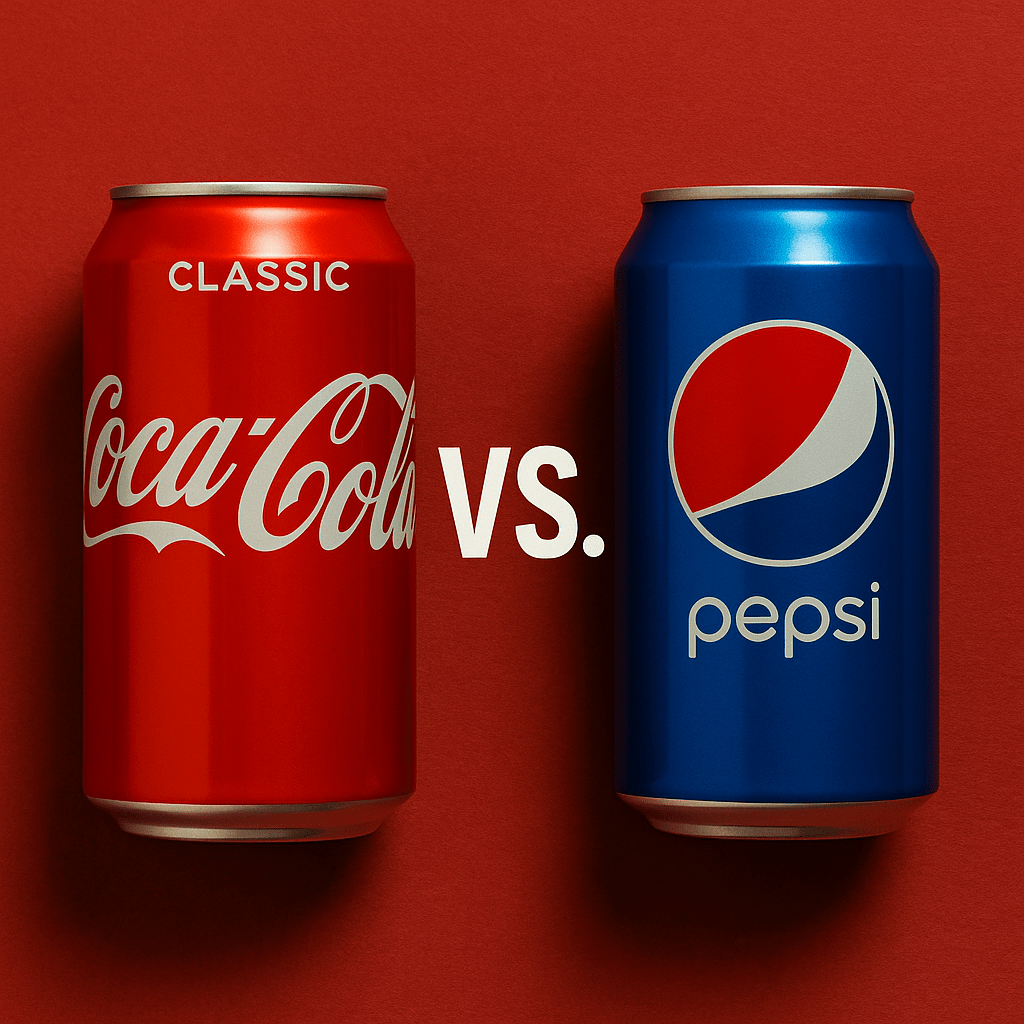
Traditional Rivalries vs. Praise: Brand Positioning and Loyalty
Traditional brand rivalries, such as Mac vs. PC or Coke vs. Pepsi, depend on competition-driven messaging that distinguishes one brand from another. These campaigns often utilize humor, exaggeration, or direct comparisons to make a brand more prominent. For example, Apple’s “Get a Mac” campaign humorously personified Mac as young and innovative, while portraying PC as outdated and clunky. This strategy, while effective for differentiation, can polarize consumers and limit cross-segment appeal (Babin & Harris, 2022).
In contrast, praising competitors can humanize brands and enhance warmth in the eyes of consumers. For example, Coca-Cola and Pepsi have occasionally exhibited mutual respect during times of crisis or celebration. When PepsiCo CEO Indra Nooyi congratulated Coca-Cola on their 125th anniversary, consumers responded positively, interpreting the message as confident and gracious. According to research, such gestures improve brand perception by showcasing emotional intelligence and goodwill (Majestic Top 10, 2021).
This approach aligns with modern consumer values, particularly among Gen Z, who favor brands that are transparent, inclusive, and emotionally intelligent (Gatesman, 2020). When brands exhibit maturity and empathy, they appeal to consumers’ deeper psychological motivations—such as belonging and trust—resulting in increased loyalty.
Why Consumer Minds Favor Praise
Consumers often form quick judgments about brands using what psychologists call “thin-slice processing”—the ability to create impressions in seconds based on limited information (Babin & Harris, 2022). When a brand praises a competitor, it disrupts expectations and sparks curiosity. Rather than seeming weak, the brand that provides praise is seen as confident and authentic.
For example, if Pepsi were to recognize Coca-Cola’s innovation in sustainable packaging, it could elicit a positive emotional response from consumers. This suggests that Pepsi prioritizes progress and the greater good over ego-driven rivalry. This cognitive dissonance—anticipating competition but observing collaboration—can enhance brand warmth and boost engagement.
Additionally, in a digital age where social proof and brand values are more significant than ever, such moments of praise are easily shared and celebrated, expanding brand reach and strengthening consumer connections.
When Praise Doesn’t Work
Despite its benefits, praising competitors is not a universal strategy. It may fall flat or backfire if consumers perceive it as insincere or opportunistic. For instance, during times of scandal or public backlash, any praise from a competitor might be viewed as manipulative or disingenuous. Additionally, in highly competitive categories with minimal brand differentiation—such as generic goods or commodities—consumers may prefer brands that emphasize superiority rather than collaboration.
Moreover, some loyalists within each brand’s base may reject praise for their preferred brand’s rival, interpreting it as a betrayal of their identity. For Coca-Cola and Pepsi, whose loyal followers have grown up with the “Cola Wars,” striking a balance between friendly rivalry and mutual respect is critical.
411 Takeaways
The evolving landscape of consumer expectations is reshaping how brand rivalries influence buying behavior. While traditional competitive marketing, like that seen between Coca-Cola and Pepsi, still holds power, new strategies grounded in warmth and authenticity are gaining traction. Praising competitors can reposition a brand as secure, emotionally intelligent, and customer-focused, all of which are crucial in attracting modern, values-driven consumers.
As brands learn to navigate the balance between rivalry and respect, they must remember one key truth: consumer perception is shaped not just by what is said, but by how and why it’s said. Whether you’re a Coke fan or a Pepsi lover, this evolution in branding signals a refreshing shift toward integrity and empathy in the marketplace.
References
Babin, B., & Harris, E. (2022). CB (9th ed.). Cengage.
Gatesman. (2020). Purchasing Behavior: Gen Z Reframed [Video]. YouTube. https://www.youtube.com/watch?v=Wlek91AUKUw
GEOGRAPHY MASTERCLASS. (n.d.). What is Demography? [Video]. YouTube. https://www.youtube.com/watch?v=qdKdsX63uuc
Majestic Top 10. (2021). Top 10 Rival Companies in History [Video]. YouTube. https://www.youtube.com/watch?v=NVN2MpxdNYU
Coca-Cola. (n.d.). Official Website. https://www.coca-cola.com
Pepsi. (n.d.). Official Website. https://www.pepsi.com

Leave a comment